Showing posts with label Sushi. Show all posts

28 August 2012

Sushi Tetsu, London – Restaurant Review

I could save you some time and just say that if you're after the best sushi experience in London then go to Sushi Tetsu and be done with it. But where would be the fun in that? This tiny restaurant in an obscure Clerkenwell alleyway is serving up some of the most authentic sushi I've had outside of Japan.

Sushi Tetsu quietly opened in June 2012 and is the creation of Toru Takahashi and his wife Harumi. In just a couple of short months the restaurant has received near reverent praise from many quarters. Such is the minuscule size of Sushi Tetsu (just seven stools surround its blonde wooden counter) that many dare not even speak its name for fear that the restaurant will be fully booked in perpetuity. But it would be a shame to keep such a wonderful place a closely guarded secret. If you love the precision, theatre and ritual of authentic Japanese sushi then a pilgrimage to Sushi Tetsu is a must.

30 September 2011

Hanami, Oslo – Restaurant Review


When you think of food in Norway today, what's the first thing that comes to mind? Pristine fillets of smoked salmon? Reindeer stew? Brown cheese? Not me. You see for me, it's sushi. Yup, Norway has enthusiastically embraced this global trend and is eating the Japanese delicacy with vigorous zeal. I'm even beginning to think that sushi has become this country's new unofficial national dish (surpassing frozen pizza and hot dogs in the process). It's particularly evident in Oslo, where it seems everywhere you look another sushi restaurant is popping up.

16 January 2011

Yashin Sushi, London – Restaurant Review

I'm back! Firstly, a somewhat belated Happy New Year. The holiday season always seems to be so hectic, leaving me in desperate need of another holiday to recover, and this year was no exception. Christmas was spent in Mrs. Nibbler's hometown of Lillehammer. For the New Year festivities we rented a little house on the beach in Whitstable with friends, followed by two weeks in my beloved London. While we were away, Oslo seems to have been blanketed with more than a liberal dose of snow. I would say it's quite charming (and it is really) but I'm a touch concerned that our impending house-move next week might be affected, mainly due to the movers' insistence that they use a crane to remove our belongings from the apartment, rather than carry them down two flights of stairs. Oh well, we shall see. In the meantime, though, a serious backlog of blog posts has been building up. So without further ado I thought I'd start the New Year with a look at Yashin Sushi, which at the moment is probably serving some of London's best sushi.

Yashin Sushi is London's latest high-end sushi restaurant. It is the brainchild of two experienced itamae: Yasuhiro Mineno (ex-head chef of the now defunct Ubon restaurant) and Shinya Ikeda (ex-chef at Yumi). Although it opened at the end of October 2010, Yashin has already been causing quite a stir among London's sushi lovers. So, when I was in London recently, Mrs. Nibbler and I decided to go there for dinner with a couple of friends who used to live in Tokyo.

On entering the smallish restaurant, the first thing you're aware of is the long sushi bar and the rather fetching glazed Victorian-style tiles. Behind the sushi counter, in bold blue neon, was a sign saying "Without Soy Sauce", swiftly followed with the subscript, "but if you want to". On seeing this I instantly fell in love with the place, as it reminded me of some of the more memorable sushi experiences I had in Tokyo, where the itamae would lovingly brush the sushi with the optimal amount of soy sauce. To then go and dip the thing in a great big lake of wasabi-laden soy sauce, as we uncouth gaijin are apt to do, would have been a terrible insult to the chef.

As we were a group of four, we were seated in the downstairs section to give us more space (sitting four abreast at the sushi counter would have been a bit odd). Unfortunately, this meant we missed out on watching our sushi being expertly crafted – a big part of the sushi experience for me. However, the downstairs space was lovely and intimate, which was only slightly let down by the cheesy 'Euro chill-out' soundtrack playing over the speakers.

The menu at Yashin is fairly straightforward; there is a selection of smaller dishes, such as salads and carpaccios, while the main courses consist of three omakase menus of 8, 11, or 15 pieces of sushi (£30, £45, and £60 respectively).
To begin with we were offered a plate of amuse bouches, from which we were to select one piece each. I chose a wonderful piece of fatty and sweet unagi (eel). I think the other choices were octopus and scallop but I can't quite remember.
While we looked at the menus we ordered some edamame (£3.80) that was served warm with yuzu salt and grated yuzu rind – we dipped the pods in the salt and sucked out the beans inside. Edamame has to be one of my all-time favourite snacks, and these were delicious.
I decided to go for the 15-piece omakase menu, but we started off with a few smaller dishes for us to share. First up was Goma Ae (£5.80) – vegetables in a sesame sauce. Carrots, green beans, courgettes, asparagus, figs and other goodies were smothered in a thick sesame paste sauce. The vegetables were fresh and crisp, and the accompanying sweet and nutty sauce went really well with them.
Next was wagyu beef carpaccio with wasabi sauce (£13.50). Thin slivers of wagyu beef were spread on a plate and dressed with a zingy wasabi sauce and garlic chips. A great dish, although the wagyu beef was not quite as tender as I've had in the past.
I adore soft shell crab, and at Yashin they serve it deep-fried in a salad with mizuna leaves and tosazu vinegar dressing (£8.40). Tosazu is a rice-wine vinegar flavoured with soy sauce, konbu, bonito flakes, and a touch of sugar to balance the flavours. This was a truly delicious dish, but I would have liked to have seen a bit more crab at this price point.
A simple green salad (£6.40) was next. There's not a huge amount to say about a green salad really. It was a salad, it was green, and it was fine. I particularly liked the zesty (ponzu?) dressing that came with it.
Kaizuka Sumiso (£6.60) – mixed shellfish salad with potatoes and miso vinegar dressing was next, and very decent it was too.
The next dish to arrive was a bowl of Yose tofu (£6.20) – handmade Japanese tofu. We all had a spoonful and were stunned into silence. I can honestly say this was perhaps the finest tofu I have ever tasted. Served still warm, and barely set, it came with grated wasabi and diced tosazu jelly, whose tart acidity was a perfect complement to the clean and fresh flavour of the tofu. Within seconds, we had scraped the bowl clean, and promptly called the waiter over to order another one. Heavenly!
Miso soup (£2.50) was then served in dainty tea cups and was packed with tiny flavoursome mushrooms.
As Mrs. Nibbler isn't too much of a fan of nigiri (I know, I know) she opted for a sashimi platter (£25) that arrived literally looking like a beautiful sculpture. Expertly cut pieces of o-toro, wagyu beef, and scallop, among others, were presented resting on crushed ice in a lacquered bowl. I wasn't allowed to try any and, judging by Mrs. Nibbler's smiles, she enjoyed it immensely.
The sushi omakase menu is served in two parts. First to arrive was a beautiful arrangement of eight nigiri sushi. These were (from top left in the photo):
  • Madai (sea bream), slicked with soy sauce and sprinkled with tiny balls of rice cracker
  • In a nod to Nobu's famous yellowtail sashimi there was hamachi (yellowtail) served with a thin sliver of jalapeño
  • Chu-toro (medium-fatty tuna) lightly grilled and sprinkled with sea salt
  • Maguro (tuna) with kisame (fresh) wasabi
  • Hirame (turbot) with chopped spring onion
  • Ebi (prawn), lightly grilled and served with salt and a touch of foie gras
  • Sake (salmon), lightly grilled and topped with ponzu jelly
  • Suzuki (sea bass)
The nigiri were just incredible and so intelligently put together. The fish was exquisitely fresh, and each piece was a well-crafted and well-thought out masterpiece. The various toppings (with the exception of the spring onion on the hirame that was way too overpowering) all added a fascinating extra dimension, in taste as well as texture. The light grilling (by blow-torch) of some of the nigiri gave a lovely hint of fire and smoke and transformed the character of the fish, turning the well-known, like salmon and tuna, into something novel and exciting. The rice was perfect too. One of the real revelations of eating sushi in Japan was the sheer quality of the rice, and at Yashin their rice was spot on – perfectly seasoned with vinegar and served with a touch of residual warmth. I also loved the gari (pickled ginger), instead of the usual thin slices, here at Yashin they pickle their own and serve it in great big chunks, which leaves much of the spicy ginger flavour intact.

The second plate of nigiri arrived looking (and tasting) every bit as spectacular as the first. This time we had:
  • Saba (mackerel) topped with kisame wasabi
  • Matsuba kani (snow crab)
  • Uni (sea urchin) served in great big blobs in a nori wrapper topped with wasabi
  • Wagyu beef, lightly seared and sprinkled with salt and pepper
  • Mate Gai (razor clam), also lightly seared and sprinkled with salt and pepper
  • More of the Madai (sea bream) with rice cracker
  • Hirame (turbot), this time served with microgreens
Desserts are typically not a lavish affair in Japanese cuisine, and at Yashin we finished our meal simply with a selection of the four different ice creams on offer, which are served with a small bowl of fruit salad. My mix of sencha (green tea) and goma (black sesame) ice creams was delicious - creamy, but not overly heavy, and packed full of their respective flavours. I managed to sneak a taste of the shiso and yuzu sorbets and can report that they were excellent too, being lighter and zestier than the ice creams.
Yashin's nigiri might not be for sushi purists, but not only are they beautiful, they are also full of exciting flavour combinations. The ingredients used here are impeccably fresh and the sushi is so visually stunning. The other smaller dishes were also of a very high standard. I must admit though, I tend to prefer my sushi to be a bit more traditional (like that I had at Tokyo's sublime Sushi Dai), but there is just so much to love about Yashin that I may have to change my mind about that.

In summary, don't come to Yashin expecting a traditional sushi experience, instead come and be wowed by their flawlessly crafted modern nigiri served in an equally modern dining room. At the moment, Yashin is serving probably some of the best sushi in London, and a trip here should not be missed. I can't wait to return.

Food:         8 / 10
Service:      7 / 10
Ambiance:  7 / 10

1a Argyll Road
London W8 7DB
United Kingdom
Tel: +44 (0)20 79381 5362
Yashin Sushi on Urbanspoon
Square Meal

22 December 2010

2010: My Ten Dishes of the Year

I sit writing this from a bitterly cold Oslo. Sunshine and warmth seem like a long-distant memory. Walking outside is a somewhat surreal experience as shadowy figures dressed in thick duvet-like jackets shuffle along the half-lit icy pavements. But it's not that bleak really. The winter solstice has just passed, and with it we can slowly expect the daylight hours to get longer and our depleted vitamin D supplies to be replenished. Christmas is just around the corner, and of course we have a fresh new year with all its challenges and delights to look forward to.

Now, what good would an end-of-year article be without some sort of look back at the year gone by? Yes folks, it's time for a clichéd top-ten list! Without further ado, I bring you my ten best restaurant dishes of 2010. Drum roll please.

In reverse order, these are:

10. Caviar with Crab and Shellfish JellyJoël Robuchon, Monte-Carlo
What a way to start a meal! A little trompe l'oeil that looks like a whole tin of sevruga caviar is, instead, caviar atop layers of shellfish jelly and sweet crab meat. A perfect blend of flavours – rich, luxurious and a blast to eat, making you feel like a billionaire oligarch. Mwah-ha-haa!

9. Yose TofuYashin, London
This was perhaps the finest tofu I have ever tasted. Served still warm, and barely set, it came with freshly grated wasabi and diced tosazu jelly, whose tart acidity was a perfect complement to the clean and fresh flavour of the tofu. Within seconds, we had scraped the bowl clean, and promptly called the waiter over to order another one. Heavenly!

8. Tartaleta de Chocolate con CajetaTopolobampo, Chicago
Second best dessert of the year is from newly Michelin-starred chef Rick Bayless. This titan of Mexican cuisine is a favourite of President Obama and I can see why. This tart consisted of luxurious, silky-smooth, dark Mexican chocolate sat atop a thin layer of soft, gooey cajeta (goats' milk caramel). This ensemble was lightly sprinkled with flakes of salt and encased in crumbly pastry. Accompanying this was a scoop of goats' cheese ice cream, toasted marshmallows, and graham cracker 'gravel'. Who knew chocolate and goats' cheese would go so well together!

7. Mascarpone Cream, Sponge Pudding, Almond Foam, White Truffle from AlbaHélène Darroze, London
The undisputed best dessert of the year was this innocent looking number from Hélène Darroze at the Connaught. The cool, sweetened mascarpone was offset by a warm, eggy, vanilla sponge pudding. The residual warmth of the rich sponge was just enough to bring out the flavour of the abundant Alba truffle shavings, so that those wonderful aromas enveloped everything. The almonds and oh-so-light almond foam added a touch of perfumed nuttiness and a variation in texture. When combined, the flavours were nothing short of breathtaking – think of it as 'trifle of the gods.'

6. O-toro nigiriSushi Dai, Tokyo
I thought I knew sushi until I ate sushi in Japan, and then I realised everything I knew about it was wrong. The main culprit was this simple piece of o-toro nigiri served to me at Sushi Dai in Tokyo's Tsukiji Fish Market. Pristine tuna (bought a few hours before) had a beautiful spider's web of rich marbling. Eating it was such a sensual experience; the cool flesh of the tuna juxtaposed by the perfectly al dente and lukewarm rice. I hardly needed to chew, the buttery tuna just melted on my tongue. Epic.

5. White Truffle RisottoLaunceston Place, London
Without doubt, the finest risotto I have ever had – rich and creamy with an oh-so-perfect consistency, full of that intoxicating white truffle aroma – I shall be having warm fuzzy dreams about this dish for a long time to come.

4. Guinea FowlOscarsgate, Oslo
At this tiny Oslo restaurant, Swedish chef Björn Svensson is performing little miracles with food. Meltingly tender guinea fowl was served with apple purée, beetroot, and potato. Scandinavia on a plate.

3. Flame Grilled Mackerel with Cucumber, Celtic Mustard and ShisoThe Ledbury, London
A classic by The Ledbury's Brett Graham. This is the dish most people rave about. Mackerel can be a tricky fish to tame – its oily fishiness is always in danger of overwhelming the taste buds. Here the fish was cooked to perfection; the core of it was soft, almost sashimi like, while the skin magically retained a smokey crispness. Accompanying this was a little parcel of smoked eel wrapped in a translucent film of cucumber jelly. A lightly pickled cucumber and delicate leaves of shiso and coriander cress added the needed acidity. I was lost for words at how good this dish was – one of the real highlights of the meal. Magnificent!

2. Langoustine with Oyster, Parsley and Seawater Emulsion, and Rye CrumbsNoma, Copenhagen
In July, I ate at Noma, and the "world's best restaurant" lived up to the hype and more. This dish brought the house down for me. The most perfect langoustine, barely cooked, was placed on a warm basalt stone that was dotted with small pearls of oyster, parsley and seawater emulsion. A purple powder of seaweed was sprinkled over the stone. This was a dish you eat with your hands and we were encouraged to "make art" as we dipped the langoustine in the emulsion. I closed my eyes and felt transported to a beach on a hot summer's day. Simply amazing.

And the winner of the Nordic Nibbler best restaurant dish of 2010 award is ... *opens envelope* ....

1. Black Truffle Explosion, Romaine, ParmesanAlinea, Chicago
Alinea totally and utterly took my breath away. The level that head chef Grant Achatz is cooking at now is just astounding. Alinea is on another planet altogether. The Michelin gods saw fit to deign this restaurant with three stars in their inaugural guide to Chicago. Every dish of the meal I had there was stunning, but the standout dish for me was a one-bite symphony of flavour called 'Black Truffle Explosion.' A wafer thin ravioli was filled with the most intense warm black truffle broth. It was eaten in one bite, releasing a cascade of unworldly truffle flavours.


This exercise was actually a lot harder than I imagined. The highlight of the year for me was undoubtedly my meal at Alinea, and at least half of the list could easily have been dishes from the newly crowned three-Michelin star Chicago restaurant. But there were lots of other incredible highlights, and looking back I feel very lucky to have been able to sample such wonderful food. I'll be honest, part of me can't wait to see the back of 2010, it's been that sort of year, but looking back at some of the happy memories, maybe it hasn't been so bad after all?

So, what have been the standout dishes of the year for you? What is your top-ten food list of 2010?

Finally, here's wishing you all a very Merry Christmas and a Happy New Year!

15 June 2010

Tuna Auctions at The Tsukiji Market, Tokyo


The alarm clock's incessant beeping woke me at 3:30am. The temptation to turn it off and snuggle under the warm duvet of my ridiculously comfortable bed at the Grand Hyatt Tokyo was almost too much. Then I realised what lay ahead. Tuna. I was heading off to the Tokyo Metropolitan Central Wholesale Market (aka Tsukiji Market), and here I would be able to witness the sight of tons and tons of tuna being auctioned off for tens of thousands of dollars. At Tsukiji the action starts early and the hotel concierge advised us to be there by 4:30am at the latest.

Tsukiji Market is truly huge. It handles over 2,000 tons of seafood each day, which by comparison is almost 30 times more than Billingsgate market in London, and employs over 60,000 people. If you were in any doubt about the importance of seafood in Japan, then you only need to look around at the sheer scale and intensity of Tsukiji Market which handles about a third of Japan's seafood. The market is split into an inner- (Jonai Shijo) and outer-market (Jogai Shijo). The inner market is where most of the activity is and apart from access to the tuna auctions it now remains closed to the public until 9:00am. The outer market consists of small restaurants and various shops selling things like restaurant supplies, kitchen utensils, amazingly sharp knives, seafood, and fruit and veg.

Tsukiji Market has had an up and down relationship with tourists and has periodically banned them from attending the famous tuna auctions due to the behaviour of some thoughtless tourists interfering with the auction process. The tuna auctions have just reopened after their latest tourist ban and have now limited the number of daily sightseers to just 140 on a first-come, first-serve basis.

The tuna auctions run from around 5:30am to 7:00am and the daily group of 140 sightseers is split into two groups of 70 to better manage the crowds. Even though we arrived by 4:30am we were in the second group which entailed about an hour and a half wait before we got to see the auctions. Before entering the auction area we were given bright green "gaijin alert" vests to wear and were guided through the market to the inner market area where the auctions take place. Even at this early hour the market was in full swing, with dozens of small motorised fish-carrying carts zipping around all over the place. One false move and you'd easily be run over. It was organised chaos and was amazing to see, this being my first time at a working fish market.


The actual auction area itself was breathtaking; A gigantic, football field-sized warehouse with hundreds of frozen bluefin tuna fish laid out in neat rows on the floor. They looked like giant steel-grey torpedoes, and the mist coming off them gave a very eerie feel to the place. The tuna has been arriving from all over the world since the previous evening and each fish had been marked with bright red paint to presumably indicate it's provenance and weight. Seven wholesalers take responsibility for bringing in the tuna from around the world and then selling it to mid-level wholesalers who in turn sell it on to distributors for use in shops and restaurants. The fish had been grouped, seemingly by size, into smaller lots. Their tails had been removed and a huge gash was cut into the rear of the fish so that a flap exposed the flesh beneath. Licensed buyers working in overalls and wearing wellington boots would inspect the fish with a small gaff and a torch to check the quality and determine how much they would bid.


Inspecting the tuna before the auction begins


Suddenly a loud clanging of hand bells indicated that an auction was about to begin. An auctioneer stood up on a plastic crate in front of a row of tuna and a small gaggle of buyers huddled around. Then the auctioneer launched into some rhythmic shouting. I have no idea what he was saying, but now and then one of the buyers would make some subtle gesture and scribble something down on a notepad. And then as quickly as it had started it was over. This lot of tuna were sold. Tens of thousands of dollars had changed hands and the auctioneer was already off to auction the next lot of tuna. Someone came round to paste labels on the fish, indicating who had just bought it. Two men hauled the beasts with their fish gaffs onto small hand carts and they were carried off to their next destination en route to being turned into wonderful sushi.

Auctioning off the bluefin tuna


Clip of a tuna auction

Labelling the winners´fish


Cutting up the tuna with a bandsaw

After that we filed out of the auction area, again watching out for the motorised carts, and instead of hanging around till 9:00am when the central wholesale market opened to the public we decided to wander off in search of some of the best sushi on the planet.

Tsukiji Market is really an amazing sight and a must-see if you are ever in Tokyo. Unfortunately though, it is not immune to changing times and its longer term future remains uncertain, at least in its current form. Due to the growth of the market there are plans to move the market to a new 374,000 sq.m. site on reclaimed land in Tokyo Bay in 2014. Sadly, it is also expected that the traditional open-outcry markets will be replaced by a computerised system. However, whether this materialises or not is another question, a recent article in the Japan Times cites the growing trend for end-users to source seafood directly from fisherman and a growing appetite for meat in Japan as a cause of the Tsukiji's declining influence. It would be a real shame if the Tsukiji Market as we know it today were to change significantly and one hopes that the Market can adapt and bounce back and keep wowing visitors with its amazing seafood spectacle.

10 June 2010

Alex Sushi, Oslo - Restaurant Review

I know, I know, I shouldn't have done it. I was only ever going to be disappointed right? Within days of arriving back from Tokyo and eating at the legendary Sushi Dai, I found myself with an insatiable itch for more of the sushi I had there. Now I must be some sort of masochists because surely, short of hopping on to the next flight to Tokyo, that is one itch that is never going to be satisfied outside of Japan, and surely not in Norway at that?

So it was that Mrs. Nibbler and I found ourselves at Alex Sushi in Oslo. This is one restaurant that I have heard consistently good things about from numerous sources. So when the sushi urge struck, this restaurant was the natural choice. So how disappointed was I then? Well, to be fair, comparing any sushi restaurant outside of Japan with Tokyo's finest is a little unrealistic. However, I was more than surprised that Alex Sushi got remarkably close, and was able to rekindle some of that sushi magic I had experienced in Tokyo. It is probably some of the best sushi I have experienced outside of Japan.

The restaurant itself is quite minimalist, with an industrial feel to it. We sat at the large central sushi bar, which is dominated by a lighting arrangement that looks a little like an upside down viking long boat. Bold artwork on the walls offsets the starkness of the interior. There is also table seating further inside the restaurant and a bar area upstairs. The overall feel was light and airy, with glass, wood and steel being the dominant materials - very Scandinavian and a very pleasant place to while away the evening.

The menu consists of a la carte selections of a variety of nigiri, sashimi, maki, tempura, and salads as well as four omakase menus which ascend in price according to the ingredients used. Mrs. Nibbler opted to go à la carte, while I went for the "Black" omakase menu, the second most expensive tasting menu they offer, at a not unreasonable (for Norway at least) NOK 595 (around €76/$92 as of writing).

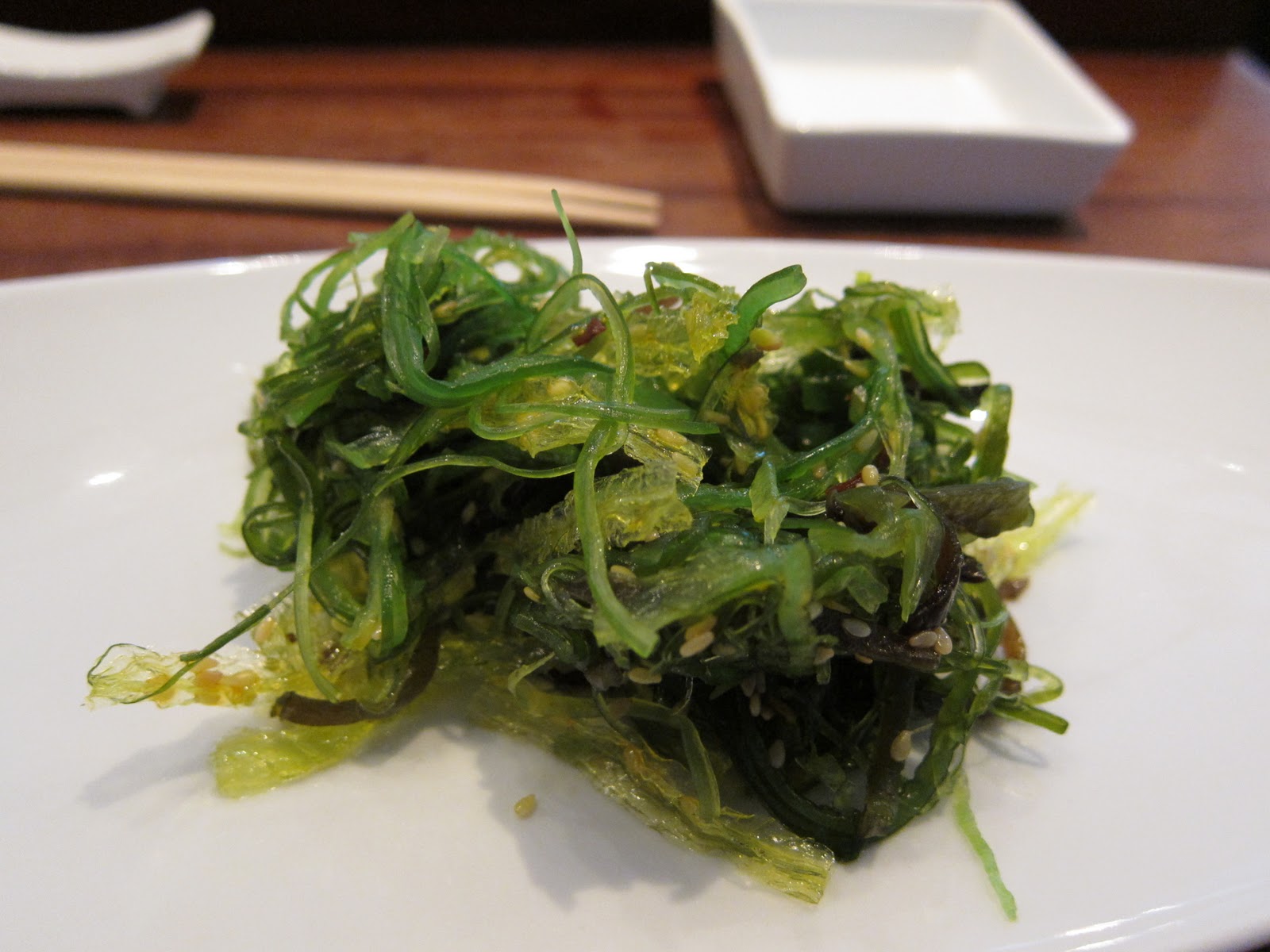
To start with I had a seaweed salad; the seaweed was finely shredded and came dressed with sesame seeds and a pleasingly sweet, but sharp, dressing. I love seaweed, it has such a satisfying squidgy crunch, and this salad was fantastic.

Mrs. Nibbler had some tempura to start with and was presented with a selection of prawn, fish and vegetable tempura. The tempura was perfectly cooked with a thin, crispy coating that was not greasy at all. I would even say that it was better than some of the tempura I had in Tokyo. The one let down was the vegetables; the asparagus tempura was great but red and green pepper tempura is just not that inspiring to be honest and at this price point I think more effort should be made to use a little bit more special ingredients (shiitake mushrooms, sweet potato, lotus root?).

Seaweed salad

 Tempura

Next, I had a selection of sashimi which consisted of hirame (halibut), hamachi (yellowtail), and sake (salmon). This was covered with the house sauce ("Alex's special sauce") which, although great, was maybe a bit too overpowering for the subtle fish, and it would have been nice to have it on the side instead. The sashimi itself was wonderfully fresh and expertly prepared, with the salmon just melting in your mouth. My only gripe was the halibut sashimi. I'm just not a fan of raw halibut, I find it's texture to be a little wet and spongy at times and I would much rather have had something like toro (tuna) or unagi (eel) instead.

Salmon and halibut sashimi
Following this was a plate of nigiri and two gunkan maki. I loved the maki, they were really interesting and very unusual and were a great blend of Scandinavian ingredients with Japanese cuisine. The first maki consisted of just the fat from the halibut and was fantastically creamy, almost like some of the uni (sea urchin) I had in Tokyo. The second maki was ikura (salmon roe) which was topped by a quail's egg yolk. The creamy egg mixed well with the salty tang of the vibrant Norwegian salmon eggs.

Ikura gunkan maki with quail egg

Selection of nigiri sushi

 The nigiri sushi was excellent too, but I felt the rice was not quite up to scratch. Had I never been to Japan I wouldn't have noticed, but the one revelation for me about eating sushi in Japan is the quality of the rice they have over there; each grain perfectly cooked al dente and separate from the other. The rice at Alex Sushi was well seasoned but just a touch too mushy. As I mentioned, prior to going to Japan I wouldn't have noticed this, so maybe I'm splitting hairs a little bit.

The nigiri consisted of yellowtail, salmon, prawn, king crab, halibut, and scallop. The yellowtail, salmon, and halibut were the same as the sashimi and the prawn and king crab were both sweet and succulent. The scallop was huge and wonderfully fresh and was probably the best of the bunch. However, again, I would have liked to have seen more variety of ingredients such as unagi, ama ebi (sweet shrimp), and toro used instead. They feature on the à la carte menu so I could have ordered them separately, but given that I had already had the same hamachi, sake and hirame for the sashimi, I think it makes sense to use different fish for the nigiri.

However, the main event for me was, a little disconcertingly, whale nigiri. Yup, raw whale meat. Before I get hate mail from PETA and Sea Shepherd et al, your concerns have been noted. Norway is a whaling nation and that's maybe not such a popular thing, but I tend to take the philosophical view that if you condone eating other animals such as cows and sheep then why not whales, who, before ending up on my plate, have probably have a much better life roaming the seas than most sheep, cows, and chickens ever did.

OK, so back to the whale nigiri. It was a rather alarming deep purple in colour and appeared to be very lean with hardly any fat on it at all. Surprisingly in taste and texture it was almost identical to beef tenderloin. Maybe a touch sweeter in taste and softer in texture. It was rather delicious though. However, for some strange reason, thoughts of childhood visits to SeaWorld and the film "Free Willy" (which I've never seen) filled my mind and made it difficult to enjoy the nigiri. Oh well, whale meat is not something I'd have regularly, if at all, but at least I can say I've tried it.

 Free willy

Finally, back to more normal things (or so I thought) with another platter. This time soft shell crab uramaki (maki rolls with the rice on the outside). I love soft shell crab, and this maki roll was fantastic. The crab meat was sweet with that satisfying crunchy characteristic of soft shell crab. The rolls were draped with thin slices of avocado and topped with ikura. Not one for the purists but who cares when it's this delicious. There was also some wonderfully sweet (but a tad overcooked) lobster meat, and two piles of seared beef fillet. Well, I thought there were two piles, but it turned out that one was seared whale meat. "Free Willy 2" I suppose. This was better than the nigiri and I think this style of cooking probably suits whale meat best. A nicely seared and seasoned exterior with a very rare interior is definitely the way to go, although I can't see it being a hit in London's Borough Market. The beef fillet was very tender but felt a bit out of place at a sushi restaurant.

Soft shell crab uramaki

Seared whale fillet

Mrs. Nibbler rounded off the evening with a plate of fried soft shell crabs with some wasabi mayonnaise for dipping. As she was getting full by now, I ended up having most of it and it was spectacular. In the words of Gregg "The Egg" Wallace, I could have eaten this all day.

Fried soft shell crabs with wasabi mayonnaise

So, where does that leave us then? I started this review quite negatively by saying that I expected to be disappointed, and yes it's always going to be futile to compare fantastic sushi in Japan with that served elsewhere, so with that in mind there were no surprises here. However, what did surprise me was how well Alex Sushi managed to hold up against Japan's finest. In isolation it's a fine restaurant, serving wonderfully fresh (predominantly Norwegian) seafood in an attractive Scandinavian dining room. The prices were reasonable too compared with other similar quality restaurants in Oslo and we paid NOK 1,045 (approx £110) for two (yes, eating out in Norway can be ruinously expensive). I would like to have another trip back to try some of the other seafood they had on offer, but from what I had I would say Alex Sushi is easily Norway's best sushi restaurant and in my opinion probably ranks just behind the sushi I had at Umu in London, which is my favourite sushi place in London (even though its more of a kaiseki restaurant). And believe me, that is one of the highest compliments I can pay.

Food:           7 / 10
Service:        8 / 10
Ambiance:    8 / 10

Alex Sushi
Cort Adelersgate 2
0254 Oslo
Norway
Tel: +47 22 43 99 99