26 September 2010

Tsunahachi, Tokyo - Restaurant Review

It's been three months since I was in Tokyo, yet I still find myself reminiscing about this glorious, utterly bonkers city. Japan has so much to delight a food-lover; it is a truly extraordinary place. Now that I'm back in Europe, it feels like the week I spent in Tokyo was just part of some wonderful dream. So when Dinner in Brooklyn made a comment about tempura on my blog, it got me thinking about my first ever meal in Tokyo.

As this was a work trip I was lucky enough to have flown in to Tokyo cosseted away in business class, enjoying the free-flowing claret like some gout-ridden Regency viscount. The downside of this was that I slept right through the in-flight meal (which was no bad thing) and arrived in Tokyo bleary-eyed and ready to eat my own weight in, well, anything remotely edible.

Fresh off the Narita Express train, I alighted at Shinjuku station - a man on a mission with a singular purpose: food, and plenty of it at that. A guidebook recommended a tempura restaurant that was not too far from the station. Tempura is good, I thought, tempura is safe - I know tempura. I wasn't quite ready to dive into the culinary unknown just yet, there would be plenty of time for that later, and the thought of deep fried stuff sounded like the perfect salve for my aching hunger.

The restaurant in question was Tsunahachi - a relatively inexpensive Tempura chain with eight restaurants in Japan. By the time I arrived, a queue had already started to form and I took my place in line with other hungry diners. Eventually, I was ushered in to a fairly spartan, but busy, dining room and was seated at a bar counter with a perfect view of the two neatly dressed itamae's, who were busy manning two deep-fat fryers.

The great thing about Japanese restaurants, at least from a foreigner's point of view, is that many of them have this bizarre display of plastic doppelgangers of their food offerings. The detailing of these is really something to behold and they are quite a work of art. They also have the very handy feature of allowing the hapless gaijin to just smile and point at what they'd like to eat.

After smiling and pointing, it transpired that I ordered the tendon (Japanese rice bowl) set menu. First, a delightfully fresh salad of shredded daikon and ginko nuts. Then, those moreish Japanese pickles. I love the way they are soft, at the same time as being, quite possibly, the crunchiest things on Earth. Then came the main event, which was a bowl of rice topped with freshly cooked tempura. Everything is cooked to order here and I watched as the itamae meticulously prepared each ingredient, gave them a quick dredge in the batter, dipped them into the hot oil with some long chopsticks, and fried them to perfection. Prawns in particular were deftly handled; their heads whipped off and their bodies worked between the chef's fingers to elongate them. I also had tempura of delicate fish fillets, sliced renkon (lotus root), and tiny shira-ebi (sweet baby prawns) that had been formed into a fat rounds of tempura. The tempura was sensational - totally greaseless and so ethereal and crisp. Accompanying them was a dipping sauce and different types of flavoured salt. To finish, some miso soup that contained tiny clams no bigger than a pea. And suddenly I understood that eating in Japan would be an experience unlike any I had ever encountered. The sheer simplicity and attention to detail is nothing short of miraculous.

This piece of culinary theatre cost me the princely sum of JPY 2,100 (€19/$23) - a shocking bargain. I gather that this sort of tempura restaurant is fairly standard in Japan, and I can only imagine what a place like 7-Chome Kyoboshi, a tempura restaurant with a brace of Michelin stars, must be like. For me though, it served as a wonderful introduction to the radical philosophy on food the Japanese have.

Food:            8 / 10
Service:         8 / 10
Ambiance:     7 / 10

Tsunahachi
Takashimaya Times Square, 13F
5-24-2 Sendagaya
Tokyo
Japan
Tel: +81 3-5361-1860

23 September 2010

Wow Bao, Chicago - Restaurant Review


I adore baozi. There's something so comforting about those soft, warm, steamed buns filled with unctuous goodness. They sit there like feathery down pillows that you yearn to slumber upon. Served with a dollop of fiery red chilli paste, they make a perfect lunch for when you're on the go.

So when I was in Chicago recently, I was intrigued by a relatively new restaurant called Wow Bao that serves "hot Asian buns" (oi, you with the dirty mind, stop it!). Wow Bao is the creation of Chicago restaurant giant Lettuce Entertain You, who own 70 restaurants nationwide, including culinary heavyweights such as Chicago's L2O, Tru, and Everest restaurants. Yet despite having a corporate giant as a parent, Wow Bao manages to retain its own quirky personality, and has developed an army of loyal fans through an active social media marketing campaign (Twitter @BaoMouth and Facebook).

Wow Bao is a fast-food style chain of restaurants and, as its name suggests, the focus here is on those moreish steamed bao buns. They offer six different savoury fillings and two sweet fillings (chocolate and coconut custard), and even three egg-filled "breakfast bao's", although I'm not sure I like the idea of the latter. They also serve jiaozi (potsticker dumplings), rice bowls, soups, and salads. But it's their heavenly bao you really want to go for. Wow Bao also make their own homemade ginger ale, which is just sensational. Made with fresh ginger, it is so crisp and refreshing with a pleasing spiciness to it. Have it plain or with pomegranate or green tea. The full menu can be seen here.

Between Mrs Nibbler and me, we tried most of the different bao's on offer. Our initial problem was that they all looked the same, and it took us a while, and a fair bit of breaking open buns and sniffing inside, until we figured out that the name of each filling was printed on the paper underneath each bao. Doh! I'd say that the spicy Mongolian beef and BBQ pork (disappointingly, it wasn't char siu) came out as our clear favourites. The buns are steamed on site and have such a wonderful light texture to them. The filling, meanwhile, is generous and deliciously spiced. OK, so they are not the most authentic baozi around, but this is how fast food should be - cheap, fresh, and delicious!

Food:        6 / 10
Service:     6 / 10
Ambiance: 7 / 10

Wow Bao
1 West Wacker Blvd
Chicago, IL 60601
Tel: +1 312-658-0305

Also, locations at:
175 West Jackson Boulevard, Chicago, +1 312-334-6395
835 North Michigan Avenue, Chicago, +1 312-642-5888

Wow Bao on Urbanspoon

20 September 2010

Oslo Farmers' Market (Bondens Marked)


One of the things I really miss about living in London is the abundance of farmers' markets. I love spending a day lazily wandering around, looking at the bounty of beautiful fresh produce, chatting to producers, and grazing on various exciting foods. So I was overjoyed to discover that Norway has a small, but growing farmers' market scene.

The Norwegian Farmers' Market association was started in 2003 and it imposes quite high standards on producers - the processing of food must be small scale and dominated by craftsmanship, raw ingredients must be locally produced and traceable, and only the producers themselves can sell their products at the market. So, although the range of products offered is quite limited compared to other markets I've been to, the quality of food that is offered is very high indeed.

Recently, I stopped by my local Farmers' Market on Vika Terrassen in Oslo along with Mrs. Nibbler and the Nibbler kids. Although we arrived early, there was already quite a sizeable crowd; a good sign of the growing interest in local, specialty foods. We spent a very pleasant couple of hours at the market and I thought I'd share some of the highlights with you.

Most of the producers that turned out are based relatively near to Oslo, so it really was great to see such wonderful produce being made locally. Here are some preserved plums from Sjødalstrand Gård, a farm just 20km south of Oslo:


Apples are in season now in Norway, and the family run Eplegården had a stand at the market. Eplegården is a family-run farm located 40km south of Oslo. They have been growing apples for five generations and the farm has over 4,000 apple trees, producing 25 varieties of apples. They were pressing apples to make fresh unfiltered apple juice, which was wonderfully crisp and sweet:


The biggest queue of the day was for this:


Warm, golden beauties with a touch of sweetness. No, not that, I'm talking about the pancakes, which were thick and fluffy, and were served with a delicious strawberry compote.

There was also some excellent organic ice cream, made by Isrosa on their farm in Herøysundet, 90km south of Bergen.


Of course, it wouldn't be a Norwegian farmers' market without brunost, or brown cheese. There were a few varieties on sale but most of these were the traditional, old-school geitost (goats cheese) variety. I tried a traditional geitost from Prestholt farm, located 1,200m above sea-level in the stunning hills of northern Buskerud County. It was dense and fudgy with a pleasant sweetness to it and had just a hint of goat about it (in a good way though).


More geitost:


Corn is in season too at the moment, and Bjørke Gård was there grilling some fresh husks of corn that were dabbed with a slick of butter. They smelt fantastic, but unfortunately they tasted a touch anaemic.


We're just at the tail end of the raspberry season now and there were some stunning examples on display. These were from Søndre Bjerkerud farm, north west of Oslo, where they grow 12 varieties of raspberries.


Søndre Bjerkerud also produces a lightly sweetened raspberry concentrate. Mix with hot water, pour into a Thermos, and you have the perfect drink to take with you on those cross-country ski trips in the forest.


There were also some interesting herb oils, vinegars, and mustard from Stabburstua, which is located south of Oslo, near the Swedish border.


Farmers' Markets are held across Norway throughout the year. For more information and dates check out the Norwegian Bondens Marked site.

16 September 2010

Raspberry Pavlova - Recipe


I love a good pavlova. It's such an iconic 80's dish and maybe just a touch naff. When I was a little kid, my mum used to always make a pavlova when she hosted dinner parties, which was garnished with slices of lurid green kiwis that probably fitted right in with the quiche, shoulder pads, and the obligatory post-dinner game of Twister.

Pavlova is a very simple dessert, and is essentially made from just four things: eggs, sugar, cream, and fruit, which is why it is imperative you use the very best examples of each ingredient. The heart of any good pavlova is a good meringue, which should be crisp on the outside and soft and moist in the middle, as there's very little joy in a totally dry meringue. There is something about meringues, though, that has always intrigued me. Their main ingredient, egg, is one of those magic foods that does things you would never have thought possible; can it really be that the same proteins that go rubbery white when hard boiled can also be coaxed into those soft, voluminous peaks you wished you could ski down?

Then there is the fruit, which should be tart and juicy to cut through the richness of the cream and the sweetness of the meringue. Raspberries are perfect and, as we're at the tail-end of the Norwegian raspberry season now, I managed to bag some excellent specimens to use. Alternatively, you could use strawberries, passion fruit, or peaches.

Here's a straightforward recipe for pavlova that I like to make when friends come round for dinner. Although simple, it never fails to bring a smile to the face. One bite of the sweet, crisp meringue tempered by the voluptuous cream and tangy fruit will have you humming Kajagoogoo songs in no time.

Ingredients (serves 6)
  • 7 large egg whites (at room temperature)
  • 350g caster sugar
  • 1 tbsp cornflour
  • 300ml whipping cream
  • 2 punnets of raspberries
Method
  1. Preheat the oven to 145°C (165°C for non-fan ovens)
  2. Beat the egg whites with an electric whisk or in a mixer until they form stiff peaks
  3. While whisking, slowly pour in the sugar so that it dissolves completely. The mixture will thicken and go glossy but don't over-whisk.
  4. Gently mix in the sifted cornflour
  5. Pour the mixture into a non-stick 23cm springform cake tin
  6. Place the cake tin in the oven for 1 hour
  7. After 1 hour, turn the oven off but leave the meringue in until it has cooled completely
  8. When cool, carefully run a knife round the edge to loosen the meringue from the sides of the tin and place meringue on a serving plate. It will break here and there but that just adds to its charm.
  9. When ready to serve, whip the cream until it forms soft, thick peaks, and carefully spread over the meringue
  10. Sprinkle the raspberries over the top and eat immediately

13 September 2010

Restaurant Eik, Oslo - Restaurant Review


For a dedicated glutton like yours truly, eating out in Norway can be such a frustrating experience. Restaurants range from the sublime to the ridiculous with alarming unpredictability, but they are united in one thing alone: price. I've said it before, but eating out regularly in Norway is a sure-fire way to financial ruin. So it only takes a few duff restaurant experiences to consign you to home-cooked meals for ever after. So imagine my sheer, unbridled delight at finding a reasonably priced little gem of a restaurant that is ten minutes from my home. Happy days - Christmas has indeed come early!

The place in question is Restaurant Eik. It was set up in 2003 by chef Ole-Johnny Eikefjord, who also has two other Oslo restaurants to his name (Fjord and Restaurant Eik Annen Etage), to provide "good food at reasonable prices". In that sense, it totally delivers on its promise, and in 2006 it was awarded a Michelin Bib Gourmand which it has held ever since.

The restaurant is located in the Savoy Hotel, but feels like a completely separate, stand-alone entity. The dining room is dominated by shades of brown and beige, with vibrant flashes of fuchsia adding a touch of colour. The atmosphere is very lively, with an exciting buzz of conversations mingling in the air.

Restaurant Eik offers a weekly-changing set menu, from which you can select three, four, or five courses. Five courses of outstanding food for Nkr 465 (€59/$75) is an absolute bargain in Norway, where a flaccid McWhopper meal will set you back the best part of Nkr 110 (€14/$18). There is also a matching wine menu that is priced at about the same level as the food, and five glasses of decent, but ordinary wine, will set you back Nkr 435 (€55/$70).

Mrs. Nibbler and I both went for the four course menu, skipping the cheese course. We began with an amuse bouche of pumpkin soup that was served with a garlicky blob of hummus with crisp bread, fried squid with seaweed and pomegranate salad, and a filo pastry samosa filled with braised meat (I forget which kind). This was a great start to the meal; the pumpkin soup in particular was rich and warming, and was perfect now that there's a slight chill in the Oslo air.

For our first course we were served a bowl of Jerusalem artichoke soup that was delightfully creamy and earthy. This was served with slices of excellent truffle salami, and a salad with beetroot, pine nuts and artichoke chips. Unfortunately, the salad had obviously been pre-dressed a long time ago, and as a result the leaves were soggy and tasted of laziness.

Next we had pan-fried redfish that was served with pea purée, orange-braised fennel, a lightly pickled tomato, and shellfish sauce. I adored this course. The fish was perfectly cooked with a firm texture and a mild, clean taste, while the pea purée was fantastic with such an intense and sweet pea flavour to it. Also, I loved the garnish of pea shoots. The whole dish looked so vibrant and fresh.

Then, a little palate cleanser in the form of a mojito granita. This was really lively, with crisp, cooling flavours of mint and lime.

For our main course we were served grilled lamb cutlets that were accompanied by risotto-style orzo pasta cooked with ceps, baby turnip, carrots, Brussels sprouts, and a concentrated rosemary sauce. Again, this dish was just outstanding and was a joy to eat. The lamb was cooked perfectly pink and tasted as though it had been lightly smoked. Unlike the anaemic cutlets of milk lamb that I've had in the past, these cutlets packed quite a strong lamb flavour. The orzo pasta was a touch of genius. It was cooked al dente, with a satisfying Parmesan kick, and a beautiful aroma of cep mushrooms - at long last a main course served in a Norwegian restaurant that didn't feature potatoes!

For dessert we had a trio of apples: slices of spiced stewed apples, an apple soup, and an apple-cinnamon sorbet with vanilla cream and cinnamon toasted oats. I'm pretty sure there was some popping candy in there too. What a stunning dessert this was! It was just how I like my desserts: light, fresh and tangy, the flavours of apple just zinging on your tongue.

To round off this excellent meal we had petit fours of mini-macaroons and caramel truffles that looked like nuggets of burnished bronze, both were heavenly.

Service was really pleasant and friendly; every dish and every glass of wine was described in detail to us, even though the restaurant was packed. But therein lies the one downside of the evening: the pace of the service was glacially slow. By the time we had finished eating, mullets were back in fashion, and I'm not talking fish, I mean this.

I suspect the tardiness has something to do with the Norwegians' habit of eating out in large groups. Now, Norwegians are a sociable bunch, and tables of 8, 12, and more are quite common here, and there were quite a few large groups that were eating at the same time as us. Inevitably, this leads to backlogs in the kitchen. In the end, our four course dinner took the best part of three hours. As good as the food is at here, it is such a major frustration for service to slip up in this way. I understand the economic need for restaurants in Oslo to serve large tables, but at least they should stagger the bookings accordingly to give the kitchen a fighting chance of serving everyone on time.

Ultimately though, this place serves truly delicious food. The level of cooking was outstanding and, given the prices here, you'd have to say that this is one of Oslo's real culinary bargains. In order to keep the prices reasonable, the kitchen uses ingredients in a very intelligent way - they minimise the use of the relatively more expensive ingredients, but then what they do with the cheaper ingredients is to be commended. This is just delicious, intelligent, and well-executed food. I will definitely be back for more, and I can see Restaurant Eik becoming one of my regular haunts in Oslo.

Food:           7 / 10
Service:        5 / 10
Ambiance:    8 / 10

Restaurant Eik
Universitetsgata 11
0164 Oslo
Norway
Tel: +47 22 36 07 10

9 September 2010

Nøgne Ø Beer


Norway doesn't provide much excitement for beer-lovers. Now, I'm hardly a bearded, flat cap-wearing member of CAMRA, but I do like a good pint. Unfortunately, over 90% of beer sold and consumed in Norway is of the generic pilsner type from brewing giants Carlsberg or Hansa Borg, which can be, well, a tad boring to say the least. But it wasn't always like this. Norway has a long tradition of brewing beer going back over 1,000 years. Indeed, a couple of hundred years ago no farm in Norway was complete without its own "bryggeghus", or brewhouse. Legislation and increased consolidation in the brewing industry saw these independent brewers gradually die out. But all is not lost. Recently, a tiny handful of beer aficionados have been resurrecting Norway's lost art of brewing. Independent breweries such as Haandbryggeriet in Drammen and Ægir in Flåm have started to produce some excellent beers, and it seems Norwegians are starting to take notice. Among the most exciting of these breweries is the tiny Nøgne Ø brewery, which is located on the beautiful south coast of Norway.

The unusual name of the brewery comes from a Henrik Ibsen poem, Terje Vigen, which is set in Nøgne Ø's hometown of Grimstad, and roughly translates as "barren isle". The protagonist of the poem sets out in search of food on a seemingly impossible journey to break the English blockade of Norway during the Napoleonic Wars of 1809. The founders of Nøgne Ø felt this was somewhat symbolic of their attempt at resurrecting Norway's lost art of brewing. Indeed, the story of Nøgne Ø is quite a remarkable one.

The brewery was started in 2002 by a headstrong Norwegian pilot by the name of Kjetil Jikiun, who still flies Airbus A340s for Scandinavian Airlines. An avid beer enthusiast, Kjetil would stock up on home-brewing equipment on his frequent trips to the US, often bringing back sacks of malt, yeast, and kegs. He teamed up with a welder and a housewife and, after much blood, sweat and tears, Nøgne Ø was born. The brewery's website has Kjetil's fascinating and brutally frank account of how the brewery began, and I encourage you to have a look. It reads like a soap opera. Who knew brewing beer could contain so much drama!

Now, as I mentioned, I'm not an expert on the amber brew by any means, but I know what I like, and I don't need an excuse to crack open a few brewskis. So, in the interest of, er, research, I will try to describe a few of Nøgne Ø's beers as best as I amateurishly can.

First up is Nøgne Ø's Bitter (4.5% ABV). This is a light ale with a slightly cloudy appearance and a rich amber colour. It's made with East Kent Golding hops that give it a quintessentially English taste with a really hoppy aroma and floral and citrus notes. It was by far my favourite of the four beers I tried, and it made me achingly homesick the instant I took my first sip. I could sup this all day, preferably somewhere by a river on a warm summer's day with the sweet sound of leather on willow in the distance.
Bitter

Next was a dark, mahogany brown ale (4.5% ABV) made with English malts and Maris Otter barley. The flavour is quite complex and pleasantly spicy, with notes of biscuits, chocolate, nuts, caramel and coffee. If you like your ale malty then you'll really enjoy this one.
Brown Ale

Then I tried a stout made with oats (4.5% ABV). Now at this point I should confess that really dark beers scare me. Would I need a knife and fork to consume this one? Apparently not - this was an easy drinking, light stout with rich, chocolately flavours and a slight hint of coffee. If you're not a fan of stout then try this one as it will really change your perceptions of the black stuff.
Wheat Stout

Finally, a Belgian-style white beer (4.5% ABV). This was very refreshing with strong citrus notes of orange and grapefruit, coriander, and slightly bitter hops - a delicious witbier that would go well with seafood.
.
 Belgian White Beer

Currently, Nøgne Ø produces 26 different beers. All of the brewery's beers are bottle conditioned, unfiltered, and made with top fermenting yeast, which gives their beers a complex and full-bodied characteristic. A few months ago, in an exciting twist, Nøgne Ø finally branched out into brewing sake, and they released their first batch in May 2010. Apparently this makes them the first ever European sake brewery (heia Norge). They currently offer five types of sake; one is pasteurised and four are more exciting, unpasteurised, nama-sakes.

Nøgne Ø is producing some of the most exciting beers in Norway, and it makes me so happy to see artisanal brewers like this popping up in Norway. If you fancy getting hold of some Nøgne Ø beer then it is available in some supermarkets across Norway (and of course at the state-run booze shops) and is exported to Finland, Sweden, Japan and the USA. If you're ever in Norway, though, Nøgne Ø also offers tours of their brewery in Grimstad.


Nøgne Ø
Gamle Rykene Kraftstasjon
Lunde N-4885 Grimstad
Norway
Tel: +47 37 25 74 00

8 September 2010

A Simple Recipe for Norwegian Klippfisk (Salt Cod)


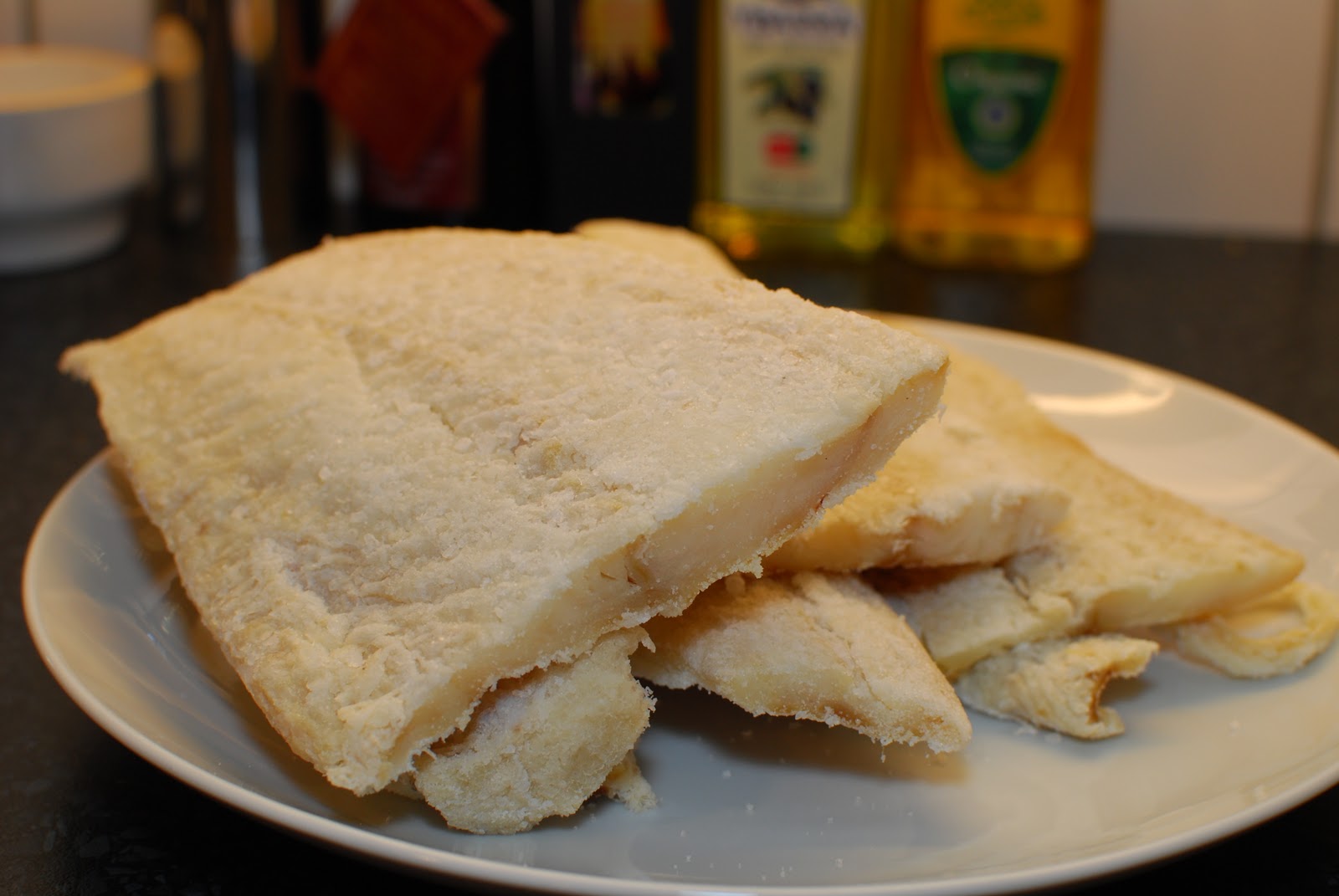
Klippfisk, or salt cod, is part of Norway's DNA and was once one of its most important exports. Yet as far as Norwegian cuisine goes, it is a bit of an outsider. The method of preserving cod by salting and then drying was introduced to Norway by the Dutch in the fifteenth century. Yet it is strange to think that eating salt cod is a relatively new phenomenon in Norway that started in the late nineteenth century when Spanish sailors first introduced bacalao to the (presumably shocked) Norwegians of the western ports of Ålesund and Kristiansund. Imagine the consternation the rugged Norwegians must have experienced eating one of their biggest exports with garlic, olive oil, chillies, and peppers for the first time.

"So, Bjørn. What do you think of this newfangled bacalao dish that Diego made for us?" 
"Ja vel, I don't know, Knut. It's a bit fancy pants. Maybe it needs some potatoes and brown sauce."
Well, by the end of the century, Spanish bacalao would become relatively popular in North West Norway. In fact, it is still eaten today by some on Christmas Eve. However, its popularity never really spread to the rest of the country and it has remained a somewhat exotic dish.

In much the same way that different grades of wine exist, there are five different grades of salt cod in Norway. In descending order of quality these are: Superior Extra, Superior, Imperial, Universal, and Popular. Between January and March each year, millions of cod migrate from the Barents Sea to Norway's northwest coastline to spawn. This spawning cod is known as skrei, and it has been a valuable commodity since the Vikings started trading it in the tenth century. Skrei is cod in its prime, full of energy and vitality, and it is from line-caught skrei that the very best, Superior Extra, klippfisk is made. The skrei is first filleted and then salted and dried twice, in much the same way as a Parma ham, which results in a dense, meaty, and richly flavoured klippfisk.

Contrary to its name, salt cod should not taste overly salty. In order to render salt cod edible it must first be soaked in plenty of water for 24-48 hours depending on the salting method and thickness of the fillets, with the water changed 2-3 times during this period. Over this time the dried fish will soak up the water and magically swell to almost its original size. It then needs to be poached gently, which will result in wonderfully firm, pearl white flesh that doesn't taste overly fishy.

This simple recipe for klippfisk is adapted from a recipe I found in one of my favourite cookbooks, "Big Flavours & Rough Edges", by David Eyre and the cooks at the legendary Eagle pub in Clerkenwell, London. I think the addition of paprika gives the dish a wonderful smokiness, and the tinned tomatoes add some welcome moisture as well as a touch of acidity. Be careful with the seasoning as it probably won't need much, if any, salt to be added. A simple green salad and a large glass of fruity red Rioja would be perfect accompaniments.

Ingredients (Serves 4-6):

  • 800g Klippfisk (Salt Cod) soaked for 24hrs
  • 2 large onions, sliced
  • 4 garlic cloves, finely chopped
  • 2 green peppers, sliced
  • 1 (400g) can chopped tomatoes
  • 10-15 waxy new potatoes, peeled and quartered
  • 2 bay leaves
  • Juice of 1 lemon
  • Chopped flat-leaf parsley
  • 1 teaspoon sweet paprika
  • 4 tablespoons black olives
  • 3 vine-ripened tomatoes, sliced
  • 3 hard-boiled eggs, sliced
  • 6 tablespoons olive oil
  • Black Pepper
Method:

  1. Before using the salt cod you need to soak it to remove the salt. The time it takes to do this varies, but generally 24 hours should do it. Soak the fish in a big bowl cold water and leave in the fridge, making sure to change the water a couple of times. 
  2. Put the soaked cod into a pan of simmering water and cook for 15 minutes until the fish flakes
  3. When cooked, remove any bones, toss the fish in a little of the olive oil and set aside
  4. Fry the onions until soft and golden in an oven-proof pan.
  5. Add the garlic, green peppers, and paprika and cook for a further 2-3 minutes
  6. Meanwhile, put the potatoes in a pan of cold water and bring to the boil. Simmer for 5 minutes
  7. Drain the potatoes and add to the onions and peppers. Add the bay leaves, lemon juice, a handful of chopped parsley, the salt cod, can of tomatoes, and some black pepper. Gently mix.
  8. Cook in the oven at 200ºC for 30 minutes.
  9. Remove from the oven and sprinkle over the olives and tomatoes.
  10. Cook in the oven for a further 5 minutes
  11. Placed the sliced boiled eggs on top, scatter over another handful of chopped parsley and drizzle with olive oil.
  12. Serve hot with the obligatory bowl of green salad

6 September 2010

Oro Bar & Grill, Oslo - Restaurant Review


Terje Ness is back in style at Oslo's excellent Oro Restaurant and Bar & Grill. Ness is one of Norway's most talented chefs and he first came to prominence as the winner of the Bocuse d'Or in 1999. He first trained under chef Eyvind Hellstrøm at the much missed double Michelin-starred Bagatelle restaurant in Oslo. In 2000 he ventured out on his own to open up his first restaurant, Oro, which was immediately successful and gained its first Michelin star just two years after opening. Due to an acrimonious dispute with the other partners, Ness left Oro in 2004 and it lost its Michelin star in the following year's guide. In 2005, Ness opened Haga restaurant next to a golf course in the smart Oslo suburb of Bærum, and he would go on to gain a Michelin star there too. Last year, Ness took over Oro and it is clear he has unfinished business there.

Mrs. Nibbler and I ate at Oro Bar & Grill, next to the main restaurant, which is run by the capable chef Rune Pal. As its name suggests, Oro Bar & Grill is designed as an informal eatery, with grilled meat and fish dominating the menu. In the 2010 Michelin guide, Oro Bar & Grill gained a bib gourmand for high quality food at decent prices, so clearly they are doing something right.

The interior of the restaurant is dominated by a large central bar, surrounded by tall wooden bar-style tables, with just one 'normal' style table that seats about six. The overall feel is very Scandinavian; casual and relaxed with unadorned light bulbs hanging from the ceiling adding to the atmosphere.

The menu here reflects Chef Ness's cooking style, which makes great use of wonderful Norwegian seafood. To start with Mrs. Nibbler had steamed mussels with chilli, garlic, ginger and coriander. A simple, yet singularly delicious dish. Stunningly fresh and sweet mussels that were perfectly cooked; a real showcase for the quality of Norway's seafood. In Norwegian, mussels are called blåskjell, literally "blue shell", and I could see how they got this name, as the mussels here were an almost iridescent and beautiful shade of blue. The Thai-inspired flavours were perfectly balanced and did not overpower the mussels at all. Mrs. Nibbler and I took turns to dip hunks of bread into the cooking juices so they became heavy and soggy and then popped them in our mouths, causing big smiles to appear on our faces.
Mussels, chilli, garlic, ginger, coriander
For my starter I had grilled red king crab leg with tarragon and lime. Again, a very simple dish. But when the quality of the seafood is as good as this the less messing around, the better. The crab meat was cooked to perfection. It was snowy white with the occasional flash of bright red and it was as tender and sweet as I have ever tasted. I was given various implements to extract every single morsel of meat from the legs, and I made sure I did. It was simply divine.
King crab with tarragon and lime

I should have stuck to seafood, as the main courses were a real disappointment. I ordered grilled neck of Iberico Bellota pork that was served with roast potatoes, tomatoes, mushrooms sautéed in cream and, bizarrely, curried onions. This was a big and messy plate of food and it was drenched with a rather sweet, brown-coloured sauce. It was a real shame as the quality of the pork was excellent and it was cooked perfectly to boot. But the accompaniments were a little incongruous. The sautéed mushrooms were of the bland, generic, button type, and the curried onions were simply onions sautéed with lots of curry powder. A bit of a hodgepodge really and not a cheap dish at Nkr 239 (€30/$39). Mrs. Nibbler opted for the daily special which was grilled beef fillet. This was identical to my dish except for the main ingredient (in fact so similar was it that I haven't even included a photo of it as it is indistinguishable from the photo of my dish) and it too was disappointing.
Grilled neck of Iberico Bellota pork, roasted tomatoes, roast potatoes, cream sautéed mushrooms, curried onions

Desserts were OK, but nothing special. Mrs. Nibbler had a generic and dull selection of sorbets: mango, raspberry, vanil...sorry, I almost nodded off there. Where was I? Yeah, sorbets - fine but boring.
Sorb...zzz
I finished with a slice of pecan pie - a little bit of southern US lovin' in Oslo. It was OK, but not great; the pastry was a bit tough and the filling was too measly and dry to do the word "pie" any justice. The accompanying chocolate mousse was another story though. It was fantastic; smooth and light with a deliciously creamy milk chocolate flavour. I would have happily had just a bowl of this instead of the pie.
Pecan pie with milk chocolate mousse
Oro Bar & Grill was such a mixed bag. The starters were just stunning and clearly the kitchen knows how to cook seafood. Unfortunately, the restaurant fell into the same trap that many Norwegian restaurants fall into - namely, the belief that a good meal out should include meat, potatoes, and lots of sauce. Filling, but hardly inspiring. Desserts could also do with a bit of a makeover as they were quite bland and generic. I'd like to give Oro Bar & Grill another chance, but next time I might try some grilled fish for mains and skip the dessert and see how that goes.


Food:          6 / 10
Service:       7 / 10
Ambiance:   6 / 10

Oro Bar & Grill
Tordenskioldsgt 6
0160 Oslo
Norway
Tel: +47 23 01 02 40

3 September 2010

Skolebrød (Norwegian "School Bread" buns)


Baking in the Nibbler household is the sole domain of Mrs. Nibbler. Norwegians are very serious about their baking and Mrs. Nibbler is no exception. Not that I mind, as she is really rather good at the dark arts of combining yeast and flour. She has a tattered old Black n' Red notebook filled with handwritten notes and recipe clippings on just about all manner of baked goods. Many of these are recipes have been handed down through her family and they remain a jealously guarded secret. After much negotiation, which basically consisted of me buying her lots of chocolate and taking the bins out, I am now able to spill the beans publicly on these wonderful skolebrød buns that Mrs. Nibbler made for my birthday recently.

Skolebrød (literally "School Bread") are sweet buns filled with custard and topped with icing sugar and desiccated coconut. They are super popular and can be found all over Norway. Traditionally, they would feature in kids' school lunch boxes as a special treat or for the annoying swots to give to the teacher, so the story goes. Nowadays, Skolebrød is fairly ubiquitous and can be found in coffee shops, snack bars or when invited to someone's house for coffee (never tea in Norway, just lots and lots of strong black coffee). Be careful though as they are very addictive, and one is never enough.

Ingredients (makes around 20 buns)
  • 500g plain white flour
  • 90g caster sugar
  • 100g butter
  • 30g fresh yeast (preferably) or one 7g packet of dried yeast
  • 350ml whole milk
  • ½ tsp ground cardamom
  • 250ml thick vanilla custard, ready made is fine - sometimes life's too short
  • Icing sugar
  • Desiccated coconut
 Method
  1. Melt the butter
  2. Mix the flour, sugar and cardamom in a bowl (and dried yeast if using that)
  3. If using fresh yeast, mix this with some of the milk in a cup
  4. Mix the rest of the milk with the warm melted butter
  5. Add the milk, butter and yeast mix (if applicable) to the flour/sugar, and mix well (with an electric mixer preferably)
  6. Leave the dough to rise so that it doubles in size (takes approximately 1 hour if you put the bowl in a sink with hot water)
  7. Cut the dough into 3 equal pieces, and roll each piece into a long sausage. Cut each sausage into smaller pieces, and make each piece into a round ball about the size of a mandarin orange to make buns. Put each bun on a baking sheet.
  8. Make a little indentation on the top of each bun. Put 1-2tsp of vanilla custard in each (this should fill the hole).
  9. Leave the buns to rise further for approx 15 mins
  10. Cook the buns in the oven for approx 8-10 minutes on 230°C (sometimes longer, depending on the size of the buns). When the buns have a light brown ring underneath them and a light brown colour on top, they should be cooked.
  11. Remove the buns from the oven and leave to cool slightly on a wire rack
  12. Meanwhile, make a thick syrup glaze using the icing sugar and some water
  13. Drizzle some of the glaze onto each bun and sprinkle the coconut on top
  14. Serve warm with, of course strong black coffee